
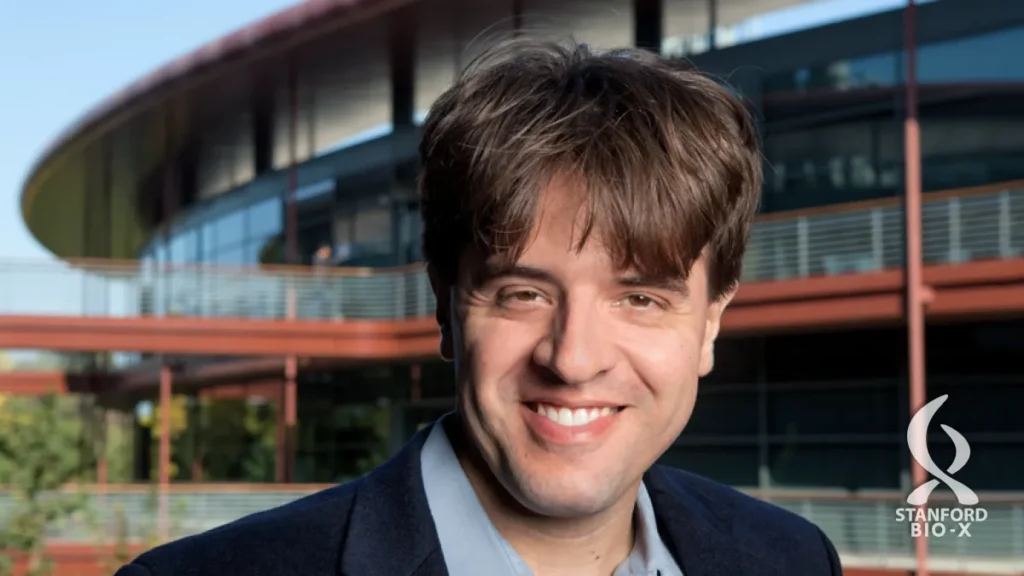

Who is Karl Deisseroth? | Biography
Karl Deisseroth is an American neuroscientist, psychiatrist, bioengineer, and author who helped pioneer optogenetics. On October 5, 2026, he shared the Nobel Prize in Physiology or Medicine with Peter Hegemann and Georg Nagel. Their discoveries enabled researchers to control nerve cells using light, transforming brain research.
Table of Contents
His life began on November 18, 1971, in Boston, Massachusetts. He is 54 years old as of October 2026. He holds the D. H. Chen Professorship at Stanford University, teaching bioengineering and psychiatry and behavioral sciences. Additionally, he serves as a Howard Hughes Medical Institute investigator and continues practicing psychiatry.
He earned his biochemical sciences degree from Harvard University in 1992, graduating summa cum laude. Subsequently, he completed a neuroscience PhD at Stanford in 1998 and earned his medical degree in 2000. He also completed his psychiatry residency at Stanford before establishing his laboratory in 2004.
In 2005, Deisseroth and his collaborators demonstrated how light could precisely activate neurons containing microbial proteins. Consequently, optogenetics gave scientists powerful tools for investigating brain circuits, behavior, and psychiatric disorders. Furthermore, his team developed CLARITY, a technique that makes biological tissue transparent while preserving important molecular information. These innovations help researchers examine neural connections and understand how brain activity shapes emotions and perception.
Beyond research, Deisseroth treats patients with depression and autism spectrum disorders. He published Projections: A Story of Human Emotions in 2021, connecting clinical experiences with neuroscience. His honors include the 2018 Kyoto Prize, 2021 Lasker Award, and 2023 Japan Prize. Moreover, he received the 2025 Asan Award in Basic Medicine. His wife, Michelle Monje, works as a Stanford physician and scientist. Together, his clinical practice, writing, and scientific discoveries connect brain research with human experience.
Karl Deisseroth Age | How Old is Karl Deisseroth?
Karl Deisseroth is 54 years old as of October 6, 2026. His birth date is November 18, 1971, and his birthplace is Boston, Massachusetts. Therefore, he will celebrate his 55th birthday on November 18, 2026. The American neuroscientist and psychiatrist earned his Harvard degree in 1992. Subsequently, he completed his Stanford neuroscience PhD in 1998 and medical degree in 2000. At 54, he shared the 2026 Nobel Prize in Physiology or Medicine for discoveries advancing optogenetics. Additionally, his career combines brain research, clinical psychiatry, and bioengineering. His November birthday marks another milestone in his distinguished career following his Nobel recognition.
Karl Deisseroth Height | How Tall is Karl Deisseroth?
Karl Deisseroth’s height is not publicly confirmed. Available public biographies do not provide a verified measurement in feet or centimeters. Therefore, his exact height remains unclear. Although photographs show him at lectures and scientific events, they cannot establish an accurate measurement. However, his work at Stanford University has earned international recognition. He combines neuroscience, psychiatry, and bioengineering to investigate how the brain works. Additionally, he helped develop optogenetics, a technique that uses light to control nerve cells. In October 2026, he shared the Nobel Prize in Physiology or Medicine for discoveries advancing this field. His research continues to shape neuroscience.
Karl Deisseroth Ethnicity
Karl Deisseroth has Swedish ancestry through his maternal grandfather, who came from Uppsala, Sweden. His family heritage therefore includes Swedish roots, although public biographies do not fully detail his wider ethnic background. Additionally, he holds American nationality and comes from Boston, Massachusetts. His father worked as a physician and professor, while his mother taught high school chemistry. He also grew up with two sisters in a family with strong scientific interests. Later, Deisseroth established his career at Stanford University, combining neuroscience, psychiatry, and bioengineering. His Swedish family connection offers a documented detail about his ancestry without defining his entire ethnicity.
Karl Deisseroth Religion and Spiritual Beliefs
Karl Deisseroth’s religion remains unconfirmed in publicly available information. However, he has explored questions about faith, spirituality, and consciousness through his work as a neuroscientist. During his Lex Fridman interview, he discussed how the brain contributes to religious experiences and our sense of self. These conversations offer insight into his scientific interests, although they do not establish his beliefs. Additionally, his book, Projections: A Story of Human Emotions, connects psychiatry with questions about human experience. The Stanford professor continues to study emotions, perception, and brain circuits. His research does not reveal whether he follows a religion or identifies as nonreligious.
Karl Deisseroth Education
Karl Deisseroth earned his bachelor’s degree in biochemical sciences from Harvard University in 1992, graduating summa cum laude. Subsequently, he joined Stanford University’s Medical Scientist Training Program to pursue medicine and neuroscience. He completed his PhD in neuroscience in 1998 and earned his MD in 2000. Additionally, he completed a medical internship and psychiatry residency at Stanford, finishing his residency in 2004. His postgraduate education included postdoctoral training. In 2006, he earned board certification in psychiatry. Together, his Harvard and Stanford education prepared him to combine clinical care, brain research, and bioengineering. His training shaped his career as a physician-scientist.
Karl Deisseroth First Wife
Karl Deisseroth had an earlier marriage before his relationship with Michelle Monje. However, his first wife’s name remains unverified in available public accounts. He has an eldest son from that marriage, separate from his children with Monje. Additionally, he has spoken about the challenges of single fatherhood during his early research career. Fatherhood also influenced his reflections on parenting and emotions. Today, his wife, Michelle Monje, works as a Stanford neuroscientist and physician. Public information does not establish his first wedding date, divorce timeline, or reasons for separation. Consequently, details about his first marriage remain limited despite his prominent scientific career.
Karl Deisseroth Wife | Who is Karl Deisseroth wife?
Karl Deisseroth’s wife is Michelle Monje, a Stanford neuroscientist, neurologist, and neuro-oncologist. She holds the Milan Gambhir Professorship in Pediatric Neuro-Oncology and researches childhood brain cancers. The couple met at Stanford while completing medical training and developed their relationship through shared scientific interests. Together, they have four children, while Deisseroth also has a son from an earlier marriage. Additionally, Monje works as a Howard Hughes Medical Institute investigator and shared the 2025 Brain Prize. On October 5, 2026, she answered the Nobel committee’s call after Deisseroth missed it. Their marriage combines mutual support, demanding research careers, and shared family life.
Karl Deisseroth Children | Kids
Karl Deisseroth has five children: Cole, Alexander, Hudson, Emma, and Sophie. He shares four children with his wife, Michelle Monje, while Cole is from his earlier marriage. As of October 2026, Alexander is 18 and attends Stanford University as a freshman. Meanwhile, Hudson is 16, Emma is 13, and Sophie is 10. His children celebrated his 2026 Nobel Prize in Physiology or Medicine alongside their mother. Additionally, Deisseroth makes school lunches for his younger children, including on the morning of his Nobel announcement. Despite his demanding research career, he remains involved in parenting and values time with his family.
Karl Deisseroth Family | Parents and Sisters (Siblings)
Karl Deisseroth’s parents are Albert B. Deisseroth and Louise Lundberg Deisseroth. His father built a career as a physician and cancer researcher before his death on November 6, 2025. Meanwhile, his mother taught high school chemistry and physics. Karl has two sisters, Kate Deisseroth and Karen Deisseroth Cichon. His older sister became an orthopedic surgeon, while his younger sister pursued a career in clinical psychology. Additionally, the family moved between Boston, Potomac, Houston, and Marin County during his childhood. This upbringing surrounded him with science, medicine, and learning. Today, his family also includes wife Michelle Monje and his five children.
Karl Deisseroth Nobel Prize 2026 | Optogenetics Breakthrough
Karl Deisseroth won the 2026 Nobel Prize in Physiology or Medicine alongside Peter Hegemann and Georg Nagel. The Nobel Assembly announced the award on October 5, 2026, recognizing discoveries involving light-gated ion channels and optogenetics. Their work transformed how scientists investigate the living brain.
Deisseroth helped turn light-sensitive microbial proteins into tools for controlling nerve cells. In 2005, his Stanford team demonstrated how blue light could activate neurons carrying the channelrhodopsin gene. Subsequently, researchers developed methods for activating or silencing selected brain cells with precision. Consequently, optogenetics allows scientists to investigate how neural circuits influence memory, emotions, movement, and behavior.
Additionally, Deisseroth’s research has advanced studies of depression, anxiety, and Parkinson’s disease. The technique also supports investigations beyond neuroscience, including interactions between nerve cells and cancer. His Nobel recognition highlights decades of collaboration, experimentation, and sharing research tools. Meanwhile, he continues combining laboratory research with clinical psychiatry at Stanford University.
Karl Deisseroth and Peter Hegemann | Nobel Prize and Optogenetics
Karl Deisseroth and Peter Hegemann helped establish optogenetics, a technique that uses light to control nerve cells. On October 5, 2026, they shared the Nobel Prize in Physiology or Medicine with Georg Nagel. Hegemann, a German researcher at Humboldt University of Berlin, studied light-sensitive proteins in algae. Alongside Nagel, he helped identify channelrhodopsins, which allow light to trigger electrical activity in cells.
Meanwhile, Deisseroth and his Stanford collaborators adapted these proteins to control neurons, demonstrating their approach in 2005. Subsequently, Deisseroth and Hegemann collaborated on understanding and improving light-gated ion channels. Their complementary research connected molecular discoveries with tools for investigating brain circuits. Additionally, they shared the 2021 Lasker Basic Medical Research Award with Dieter Oesterhelt. Together, their contributions transformed research into memory, emotions, behavior, and neurological and psychiatric disorders.
Karl Deisseroth Career | Stanford, Optogenetics and Nobel Prize
Karl Deisseroth built his career at Stanford University, combining neuroscience, psychiatry, and bioengineering. He established his laboratory in 2004 after completing medical and research training. Subsequently, his team demonstrated light-based control of neurons in 2005, helping establish optogenetics.
Later, Deisseroth expanded his research through CLARITY, a technique that makes tissue transparent for detailed imaging. He became a full professor in 2012 and a Howard Hughes Medical Institute investigator in 2014. Additionally, he continues treating patients with mood disorders and autism spectrum conditions.
His laboratory develops tools for studying brain circuits, emotions, perception, and behavior. Meanwhile, he published Projections: A Story of Human Emotions in 2021. In October 2026, he shared the Nobel Prize in Physiology or Medicine for discoveries advancing optogenetics. His career connects experimental neuroscience with clinical psychiatric care.
Karl Deisseroth Net Worth 2026
Karl Deisseroth’s net worth remains unverified, although his long scientific career has earned him substantial prize money. He received $3 million for winning the 2016 Breakthrough Prize in Life Sciences. Additionally, his 2026 Nobel Prize brings a share of the 12 million Swedish kronor award. He shares that prize equally with Peter Hegemann and Georg Nagel, making his portion four million kronor. Meanwhile, the Stanford professor also works as a psychiatrist and author. However, prize winnings alone cannot reveal his overall personal wealth. His assets, investments, expenses, and debts would also affect any accurate calculation of his current net worth.
Biography Summary
| Detail | Summary |
|---|---|
| Full name | Karl Alexander Deisseroth |
| Date of birth | November 18, 1971 |
| Age | 54 as of October 6, 2026 |
| Birthplace | Boston, Massachusetts, United States |
| Nationality | American |
| Ancestry | Swedish roots through his maternal grandfather |
| Profession | Neuroscientist, psychiatrist, bioengineer, and author |
| Current position | D. H. Chen Professor at Stanford University; Howard Hughes Medical Institute investigator |
| Education | Harvard bachelor’s degree, 1992; Stanford neuroscience PhD, 1998; Stanford MD, 2000 |
| Known for | Pioneering optogenetics and developing CLARITY |
| Career milestones | Established his laboratory in 2004; demonstrated light-based neuronal control in 2005 |
| Nobel Prize | 2026 Nobel Prize in Physiology or Medicine, shared with Peter Hegemann and Georg Nagel |
| Other major awards | 2016 Breakthrough Prize, 2018 Kyoto Prize, 2021 Lasker Award, and 2023 Japan Prize |
| Wife | Michelle Monje, a Stanford physician and neuroscientist |
| First wife | Her name remains unverified |
| Children | Five: Cole, Alexander, Hudson, Emma, and Sophie |
| Parents | Albert B. Deisseroth and Louise Lundberg Deisseroth |
| Siblings | Two sisters: Kate Deisseroth and Karen Deisseroth Cichon |
| Book | Projections: A Story of Human Emotions (2021) |
| Height | No publicly confirmed measurement |
| Religion | No publicly confirmed religious affiliation |
| Net worth | Unverified; prize earnings do not establish total personal wealth |