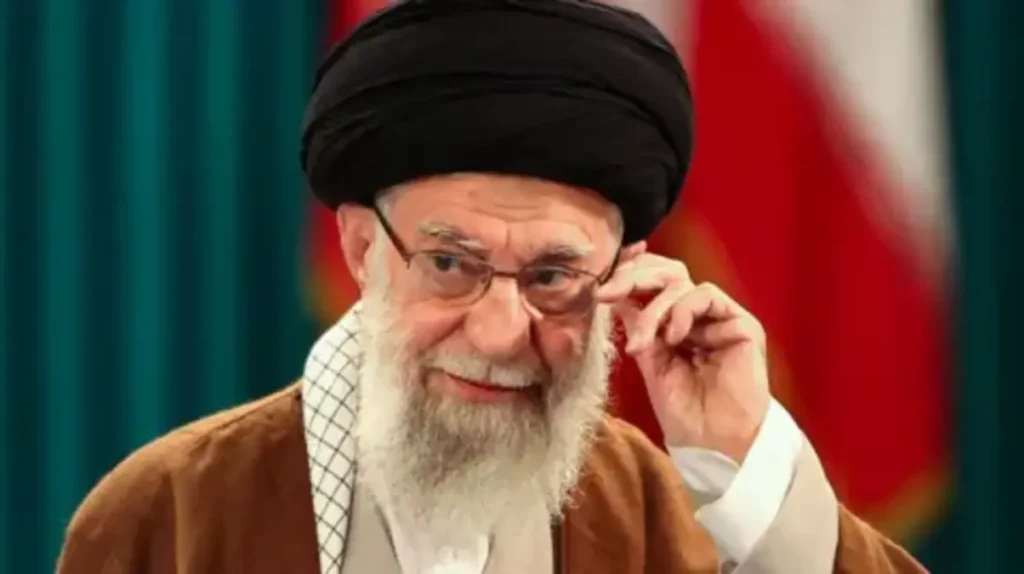

Ayatollah Ali Khamenei Biography | Wikipedia
Who is Ayatollah Ali Khamenei? | Who is the Supreme Leader of Iran?
Ali Hosseini Khamenei (19 April 1939 – 28 February 2026) was an Iranian cleric and politician who served as Supreme Leader of Iran from 1989 until his assassination in 2026.
He was born in Mashhad, Iran, into a religious family and began theological studies at a young age. Then, he continued advanced religious training in Qom and Najaf, becoming a respected Shiʿa cleric. Before the 1979 Iranian Revolution, he opposed the Shah’s rule and was imprisoned several times for his activism.
After the revolution, Khamenei rose quickly in the new government. Moreover, he served as president of Iran from 1981 to 1989, shaping early post-revolution politics. Then, he became Supreme Leader in 1989, succeeding Ayatollah Ruhollah Khomeini and gaining ultimate authority over the military, judiciary, and media.
During his rule, Khamenei expanded the Islamic Revolutionary Guard Corps (IRGC) and backed Iran’s nuclear program, influencing Middle East geopolitics. Also, he suppressed nationwide dissent, including major protests in 2009 and 2022, reinforcing his power with strong security forces.
However, on 28 February 2026, Khamenei was assassinated in a joint U.S.–Israeli airstrike on Tehran, ending his 37-year leadership. After Iranian state media confirmed his death, the government declared 40 days of national mourning. Overall, Khamenei left a polarizing legacy as one of Iran’s most influential and divisive leaders.
Ali Khamenei Age | How Old Was Iran’s Supreme Leader at Death?
Ali Khamenei was 86 years old at the time of his death on 28 February 2026. He was born on 19 April 1939 in Mashhad, Iran. Therefore, he lived through major political shifts in modern Iranian history. Moreover, he served as Supreme Leader of Iran for nearly 37 years, from 1989 to 2026. Before that, he led the country as President of Iran from 1981 to 1989. Despite reported health concerns in later years, he remained politically active. Overall, his age reflected decades of powerful leadership and regional influence.
Ali Khamenei Height | How Tall Was Iran’s Supreme Leader?
Ali Khamenei stood 5 feet 9½ inches tall (1.77 meters). His height gave him a strong and composed presence during official speeches and public appearances. Moreover, he often appeared taller due to his upright posture and traditional clerical attire. As Supreme Leader of Iran from 1989 to 2026, he addressed massive crowds and led major state ceremonies. Although height does not determine authority, his stature complemented his commanding political image in Iran and across the Middle East.
Ali Khamenei Education
Ali Hosseini Khamenei began religious education in Mashhad, learning the Quran as a young child. Then, he studied at theological schools in the city before moving abroad briefly to Najaf, Iraq for advanced studies. Later, he joined the Qom Seminary in Iran, where he studied under prominent Shi’a scholars including Ayatollah Ruhollah Khomeini from 1958 to 1964. During this period, he learned Islamic jurisprudence, theology, and Arabic grammar. Moreover, his seminary training shaped his later leadership in the Islamic Republic of Iran and his role as Supreme Leader from 1989 to 2026.
Ali Khamenei Religion | Ali Khamenei Shia or Sunni
What Sect Was Iran’s Supreme Leader?
Ali Khamenei was a Twelver Shia Muslim cleric, rooted deeply in Shi’a Islam and its traditions. He grew up in a religious family in Mashhad, embracing Islam from childhood. Moreover, his education in Qom and Najaf seminaries reinforced his commitment to Shia jurisprudence and theology. Therefore, he became a prominent Shi’a religious authority and leader within Iran’s theocratic system. Khamenei often referenced Islamic teachings when shaping state policy and legal decisions. Furthermore, he supported the principle of velayat-e faqih, empowering Islamic jurists in political leadership. Although some critics questioned aspects of his religious status, he held the title of ayatollah and marja’ in Twelver Shi’ism.
Ayatollah Ali Khamenei Wife | Spouse
Ali Khamenei married Mansoureh Khojasteh Bagherzadeh in 1965 after they met at a private religious gathering. She was born in Mashhad, Iran, into a religious family and has remained largely private and out of the public eye. She and Khamenei raised six children, including Mostafa, Mojtaba, Masoud, Meysam, Boshra, and Hoda. Despite her role as the spouse of Iran’s Supreme Leader from 1989 to 2026, she stayed away from public political life and rarely gave interviews. Moreover, Mansoureh supported her husband throughout key phases of his career, from presidency to supreme leadership. Although much of her personal life remains unseen, she maintained a long-lasting marriage that spanned over five decades until Khamenei’s death in 2026.
Ali Khamenei Children | Kids
Ali Khamenei had six children with his wife Mansoureh Khojasteh Bagherzadeh, including four sons and two daughters. His sons were Mostafa, Mojtaba, Masoud, and Meysam, all involved in religious or political spheres in Iran. Meanwhile, his daughters were Boshra and Hoda, who maintained more private lives. Mojtaba Khamenei, the second eldest son, held influence within Iran’s security apparatus. Also, his eldest son Mostafa studied in seminaries and married into a clerical family. Furthermore, his children often maintained strong ties to other religious families. Therefore, the Khamenei family remained prominent in Iran’s clerical and political landscape.
Ali Khamenei Family | Parents, Siblings & Early Life Background
Ali Khamenei was born on 19 April 1939 in Mashhad, Iran, into a devout Shi’a Muslim family. His father, Seyyed Jawad Khamenei, worked as a religious scholar and merchant. Meanwhile, his mother, Khair-allah Andalib, supported his early religious education. In addition, Khamenei grew up with several siblings, including a brother named Hadi who also pursued religious studies. Furthermore, his family’s faith influenced his choice of seminary schooling in Qom. Together, their religious values shaped his future role as Supreme Leader.
Ayatollah Ali Khamenei Killed: How Iran’s Supreme Leader Died (Full Details)
Ali Khamenei was killed on 28 February 2026 during a reported joint U.S.–Israeli airstrike on Tehran. At the time, he was 86 years old and had ruled Iran since 1989. The strike reportedly targeted a high-security leadership compound in the capital. Soon after, Iranian state media confirmed his death. Consequently, authorities declared 40 days of national mourning across the country. His assassination ended nearly 37 years as Supreme Leader of Iran, making him one of the longest-serving leaders in modern Middle East politics.
Moreover, his death immediately intensified regional tensions and reshaped Iran’s political landscape. Iranian officials condemned the attack and vowed retaliation against foreign adversaries. Meanwhile, global leaders called for restraint to prevent wider conflict. Inside Iran, the Assembly of Experts began urgent succession discussions. Furthermore, security forces increased their presence in major cities to prevent unrest. Therefore, Khamenei’s killing marked a major geopolitical turning point, influencing Iran’s leadership structure and future foreign policy direction.
Ali Khamenei Successor | Who Will Replace Ali Khamenei? Iran’s Next Supreme Leader Revealed
After Ali Khamenei’s death on 28 February 2026, Iran began its constitutional process to choose a new Supreme Leader. The Assembly of Experts, a body of senior Shi’a clerics, will elect the next leader. Meanwhile, a temporary leadership council led by President Masoud Pezeshkian, judiciary chief Gholamhossein Mohseni Ejei, and a Guardian Council representative assumed leadership duties. Additionally, Mojtaba Khamenei, the late leader’s son, emerged as a potential candidate, though constitutional concerns remain over hereditary succession. Furthermore, other clerics, including Ayatollah Mohsen Araki and Sadegh Larijani, are mentioned among possible contenders with religious and political influence within Iran’s establishment. Therefore, the succession remains highly uncertain as Iran faces domestic unrest and geopolitical pressure.
Ali Khamenei Books | Major Works by Iran’s Supreme Leader
Ali Hosseini Khamenei authored many books on Islam, politics, and ethics, spanning decades of speeches and research. His works combine religious thought, Quranic interpretation, and leadership guidance.
Notable Books by Ali Khamenei
- An Outline of Islamic Thought in the Quran – explores core Islamic beliefs.
- Islamic Beliefs: Reclaiming the Narrative – addresses faith and modern challenges.
- The Compassionate Family – discusses family values and ethics.
- Cell No. 14: The Autobiography – recounts personal early experiences.
- Ajwibat al-Istiftāʾāt – a collection of religious rulings.
- روح التوحيد (Spirit of Monotheism) – explains Tawhid philosophy.
Additional Works
Khamenei also published books on prayer, patience, family, and Quranic lectures, and many titles appear in Persian and Arabic collections.
Ali Khamenei Net Worth 2026
Ali Khamenei’s exact net worth remains unclear due to opaque financial disclosures in Iran. However, investigations show he controlled a vast business empire worth about $95 billion through the Execution of Imam Khomeini’s Order (Setad) and related foundations. Though experts found no direct evidence he personally owned all assets, his office exercised control over many economic entities. Meanwhile, critics say this concentrated wealth contrasts with ordinary Iranians’ struggles under sanctions and inflation. Additionally, some officials estimated even higher figures, though these claims vary widely.