
Who was June Jones? | Biography
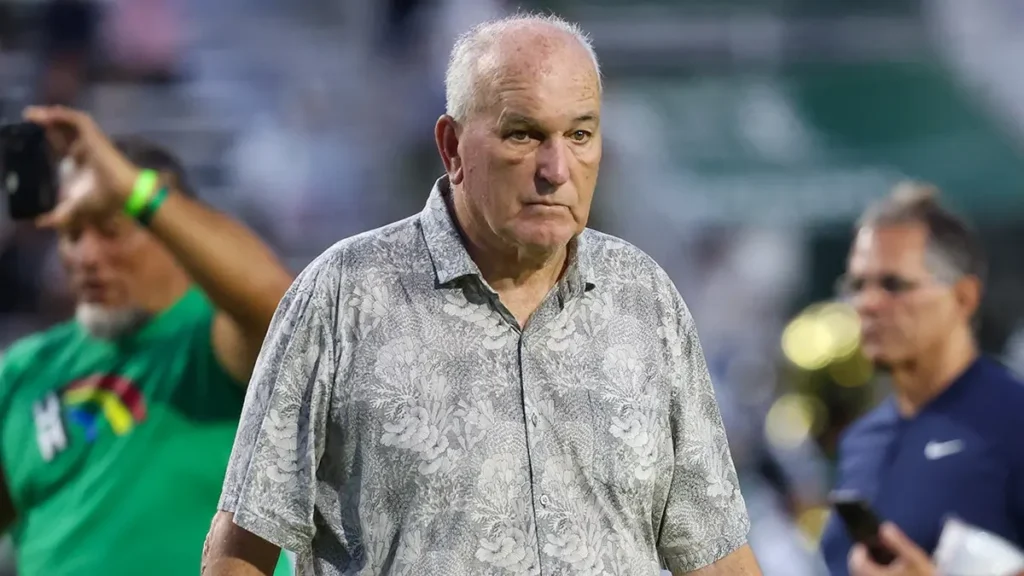
June Jones was an American football coach and former professional quarterback associated with the run-and-shoot offense. His biography spans college football, the NFL, the CFL, and spring professional leagues. He coached the Atlanta Falcons before leading successful college football rebuilding projects at Hawaii and Southern Methodist University. His Hawaii teams produced major passing performances, conference championships, and a Sugar Bowl appearance. Earlier, he played quarterback professionally in Atlanta and Toronto.
Table of Contents
Born February 19, 1953, in Portland, Oregon, Jones attended Grant High School before moving through three college programs. He played at Oregon and Hawaii before establishing himself at Portland State. There, coach Mouse Davis developed his understanding of the run-and-shoot system. Professional playing opportunities followed during the late 1970s and early 1980s. His coaching career subsequently brought that offensive approach to different teams and football leagues across multiple competitive levels.
Jones became Hawaii’s head coach in 1999, immediately reversing a winless season with a winning campaign. His tenure included 76 victories, two Western Athletic Conference titles, and the school’s unbeaten 2007 regular season. Later, he led Dallas-based SMU football to its first bowl appearance in 25 years. Four consecutive bowl trips followed during his Dallas tenure. He subsequently coached the Hamilton Tiger-Cats and the Houston Roughnecks, extending his professional career.
Jones publicly discussed his marriage to Diane and their four children in a detailed March 2022 interview. His professional work also included charitable football initiatives in American Samoa. He died October 29, 2026, aged 73, prompting tributes from former universities, players, and colleagues. Hawaii’s official announcement did not disclose a cause of death. His coaching record remains closely connected with quarterback development, passing offenses, and rebuilding programs after difficult seasons.
June Jones Age | How Old was June Jones?
June Jones was 73 when he died on October 29, 2026. He was born February 19, 1953, in Portland, Oregon. His 73rd birthday occurred earlier that year. His full name was June Sheldon Jones III. The name continued a family naming tradition, and his son was publicly identified as June IV. The University of Hawaii confirmed his death on October 29. The announcement did not provide a medical cause.
June Jones Height | How Tall was June Jones?
June Jones’s recorded playing height was 6 feet 4 inches, approximately 193 centimeters. Pro Football Reference lists that measurement in his professional quarterback profile. It describes his playing record rather than a newly measured height late in life.
June Jones Ethnicity
June Jones’s ethnic ancestry is not reliably established by the sources reviewed. He was American and grew up in Oregon. His connection with Hawaii came through playing, coaching, and community work; it does not establish Native Hawaiian ancestry.
June Jones Education
June Jones attended Grant High School in Portland before playing college football at three universities. His college route included Oregon, Hawaii, and Portland State. At Portland State, he played during 1975 and 1976 under Mouse Davis. The Vikings recorded eight victories in each season, establishing an important period in the program’s history. Jones earned first-team All-America recognition in 1976. Portland State later inducted him into its athletics Hall of Fame in 1998. These records establish attendance and sporting achievements. They do not, by themselves, confirm a particular earned degree. His coaching expertise developed through playing, professional experience, and long associations with established offensive coaches.
June Jones Wife | Was June Jones Married?
June Jones publicly identified Diane as his wife in a 2022 interview with sportswriter Kerry Eggers. The profile reported that they divorced in 2002 and remarried in 2017. Jones discussed their family and supplied photographs showing the couple together. That direct interview establishes the relationship history without relying on anonymous marriage claims. The reviewed university death announcements did not provide an updated marital history.
June Jones Children
June Jones and Diane had four publicly identified children. Their son was June Jones IV, while their daughters were Kelli, Jenni, and Niki. In the 2022 Eggers interview, Jones discussed the family and their grandchildren. The article described his son working as an airline pilot and his daughters pursuing separate careers. Those occupations reflected the interview’s publication period and should not automatically be treated as current employment. Family photographs accompanied the profile. This biography omits addresses and additional private information about younger relatives.
June Jones Family | Portland Upbringing
June Jones grew up in Portland, where Grant High School formed an early part of his sporting life. His full name reflected a naming tradition that preceded him. In a direct interview, he recalled asking his grandfather how the unusual first name originated. Jones later maintained connections with Portland through football camps and former teammates. His playing years at Portland State also linked him with coach Mouse Davis. Those local sporting relationships preceded his better-known work in Hawaii and Dallas. University records emphasize this Oregon background. They do not detail his parents’ occupations or siblings.
June Jones Career | Quarterback to Head Coach
June Jones built a coaching career after playing quarterback for the Atlanta Falcons and Toronto Argonauts. Early coaching assignments included Hawaii and the Denver Gold. He worked with established passing coaches before becoming the Falcons’ head coach from 1994 through 1996. An interim head coaching assignment with the San Diego Chargers followed in 1998.
Hawaii appointed him before the 1999 season, beginning a nine-year tenure that included conference titles and six bowl appearances. He moved to SMU in 2008, rebuilding the Mustangs and reaching four consecutive bowls. He resigned in September 2014. Later assignments included the Hamilton Tiger-Cats, the Houston Roughnecks, and work in spring football. His route repeatedly connected quarterback instruction with broader responsibility for an offense or an entire team. The programs, leagues, and competitive circumstances changed throughout that professional timeline.
June Jones Playing Career
June Jones played professional quarterback after his college career at Portland State. His NFL record includes time with the Atlanta Falcons between 1977 and 1981. He later played for the Toronto Argonauts in 1982. That Toronto assignment reunited him with Mouse Davis, whose offense had shaped his college development. His professional playing role generally differed from the prominent head coaching positions he later held. It nevertheless gave him experience inside NFL and CFL organizations. Portland State remembered him as an important early quarterback in its successful passing system. His later coaching ideas grew from that playing background and subsequent work with other offensive specialists.
June Jones Run-and-Shoot Offense
June Jones became closely associated with the run-and-shoot, a passing system he learned under Mouse Davis. The approach spreads receivers and asks the quarterback and pass catchers to respond to defensive coverage. His teams used passing formations to create opportunities for players who did not always fit traditional recruiting measurements. At SMU, he described using the system to compete against programs with stronger recruiting advantages. However, he did not treat the offense as permanently finished. In a later interview, he credited Bill Walsh with encouraging continual adjustments. Walsh visited Hawaii and discussed ways to incorporate ideas from the West Coast offense into Jones’s existing approach.
June Jones Hawaii Career
June Jones coached Hawaii from 1999 through 2007, compiling a 76–41 record. The program had finished 0–12 in 1998 before his arrival. His first team improved to 9–4 and defeated Oregon State in the Oahu Bowl. Hawaii also shared the Western Athletic Conference championship that season. Subsequent teams developed prolific passing attacks and returned to postseason games. Quarterbacks including Timmy Chang and Colt Brennan became central figures in that period. Across nine seasons, Jones led Hawaii to six bowl appearances and four bowl victories. The university’s 2026 tribute emphasized both the immediate turnaround and the sustained achievements that followed during his tenure.
June Jones 2007 Season and Sugar Bowl
June Jones led Hawaii through an unbeaten 12–0 regular season in 2007. The team won the Western Athletic Conference championship and earned a place in the Sugar Bowl. Quarterback Colt Brennan finished third in that year’s Heisman Trophy voting. Hawaii’s passing offense attracted national attention as the team pursued a major postseason opportunity. The season did not end undefeated. Georgia defeated Hawaii 41–10 on January 1, 2008, leaving the Warriors with a 12–1 final record. That distinction separates the perfect regular season from the complete campaign. The Sugar Bowl appearance nevertheless marked an exceptional postseason milestone for Hawaii’s football program under Jones.
June Jones SMU Career
June Jones became SMU’s head coach in January 2008 after leaving Hawaii. His first Dallas team finished 1–11, before a substantial improvement the following season. In 2009, SMU reached its first bowl game in 25 years. The Mustangs defeated Nevada 45–10 in the Hawaii Bowl, finishing 8–5. Three further bowl appearances followed, producing a run of four consecutive postseason trips from 2009 through 2012. The program won three of those four bowls. SMU’s tribute following his death highlighted that restoration of competitive results. Jones stepped down on September 8, 2014, with the university citing his decision to address personal issues.
June Jones CFL and Spring Football
June Jones coached the Hamilton Tiger-Cats during parts of 2017 and 2018. He first joined as an assistant before taking charge after an 0–8 start. Hamilton won six of its final ten games that season. The following team finished 8–10 and reached the East Division final. He later stepped aside for Orlondo Steinauer, remaining with the organization before leaving for Houston. In the 2020 XFL, Jones coached the Houston Roughnecks to a 5–0 record. The pandemic then interrupted the competition. Those five victories represented an unbeaten shortened season, rather than a completed championship campaign. His later work included another role in spring professional football.
June Jones Foundation and American Samoa
June Jones supported football development and community assistance in American Samoa through charitable initiatives. In 2008, SMU documented coaches traveling there for the June Jones Football Academy. The free event connected football instruction with opportunities for young players. The foundation’s wider activities included educational support and assistance linked with medical needs. Coaches and former players participated in the academy, bringing professional and college experience to the sessions. These efforts formed a distinct part of his work outside regular team competition. They also connected his relationships in Hawaii with football communities elsewhere in the Pacific. Charitable program spending should not be treated as evidence of his personal wealth.
June Jones Salary
June Jones’s 2008 SMU agreement was reported at approximately $2 million annually over five years. A 2011 university-hosted report also documented that arrangement. This was historical coaching compensation, not his income in 2026. The reviewed evidence does not establish his complete later earnings or final annual pay.
June Jones Net Worth 2026
June Jones’s net worth at death is not reliably established by public estate disclosures. Historical coaching contracts do not reveal remaining assets, expenses, taxes, or liabilities. No defensible current estate total was verified.
Biography Summary
| Category | Details |
|---|---|
| Full name | June Sheldon Jones III |
| Known as | June Jones |
| Profession | Football coach and former professional quarterback |
| Famous for | Run-and-shoot offense and rebuilding Hawaii and SMU |
| Date of birth | February 19, 1953 |
| Age at death | 73 |
| Birthplace | Portland, Oregon, United States |
| Nationality | American |
| Ethnicity | Detailed ancestry not reliably established |
| Recorded height | 6 feet 4 inches, approximately 193 centimeters |
| High school | Grant High School, Portland |
| Colleges attended | Oregon, Hawaii, and Portland State |
| Academic degree | Specific earned qualification not verified |
| Wife | Diane; remarriage in 2017 documented in a 2022 interview |
| Children | Four: June IV, Kelli, Jenni, and Niki |
| Professional playing teams | Atlanta Falcons and Toronto Argonauts |
| NFL head coaching | Atlanta Falcons; interim San Diego Chargers coach |
| Hawaii tenure | 1999–2007; 76–41 record |
| SMU tenure | 2008–2014; four consecutive bowl appearances |
| Other coaching | Hamilton Tiger-Cats and Houston Roughnecks |
| Community work | June Jones Football Academy in American Samoa |
| Death date | October 29, 2026; cause not disclosed by Hawaii |
| Historical salary | Approximately $2 million annually under his 2008 SMU agreement |
| Net worth | Estate value not reliably established |